


ELD Compliance Crisis
11 Марта, 2026
Why ELD compliance violations create serious risks for owner operators ...
Read more

Dispatch
6 minutes

What dispatchers should do when a truck driver loses ELD compliance. Practical steps for trucking dispatchers and safety managers.


What dispatchers should do when a truck driver loses ELD compliance. Practical steps for trucking dispatchers and safety managers.
Contents:
Electronic Logging Devices (ELD) are a critical part of compliance in the US trucking industry. When a driver loses ELD compliance, it creates serious risks for the carrier, including violations, fines, and potential FMCSA audits.
Because of this, every truck dispatcher must understand how to react immediately when an ELD problem occurs.
ELD compliance means that the driver’s logbook, driving hours, and duty status are properly recorded according to FMCSA regulations.
Common compliance requirements include:
If any of these elements fail, the driver may fall out of compliance.
Dispatchers often encounter several typical situations where drivers lose compliance.
These issues must be handled quickly to prevent violations.
When a driver reports a compliance issue, dispatchers should follow several steps.
Fast response helps reduce the risk of FMCSA violations.
Handling compliance problems requires practical knowledge of trucking regulations.
Dispatchers who understand HOS rules and ELD systems can prevent serious violations and protect the carrier.
Many professionals learn these skills through dispatch42 school, which focuses on real trucking industry operations.
If the issue cannot be solved by the dispatcher alone, the safety manager must review the logs.
Safety departments typically:
This process protects the carrier during inspections and audits.
Experienced dispatchers focus not only on reacting to violations but also on preventing them.
Preventive actions include:
Proper monitoring significantly reduces compliance risks.
When a driver loses ELD compliance, dispatchers must react quickly and professionally.
Understanding HOS rules, ELD systems, and FMCSA regulations is essential for protecting both drivers and trucking companies.
The driver may receive a violation during a roadside inspection and the carrier may face penalties or audits.
Both dispatchers and safety managers are responsible for monitoring driver logs and preventing compliance violations.
Dispatchers can identify issues, but safety managers typically review and approve log corrections.
Share on social media:


Enter your email to receive the latest news

Want more useful information?
Similar news
ELD Compliance Crisis
11 Марта, 2026
Why ELD compliance violations create serious risks for owner operators ...
Read more

Fake CDL Schools Crisis
11 Марта, 2026
Why the US trucking industry still faces a driver shortage in 2026 and ...
Read more
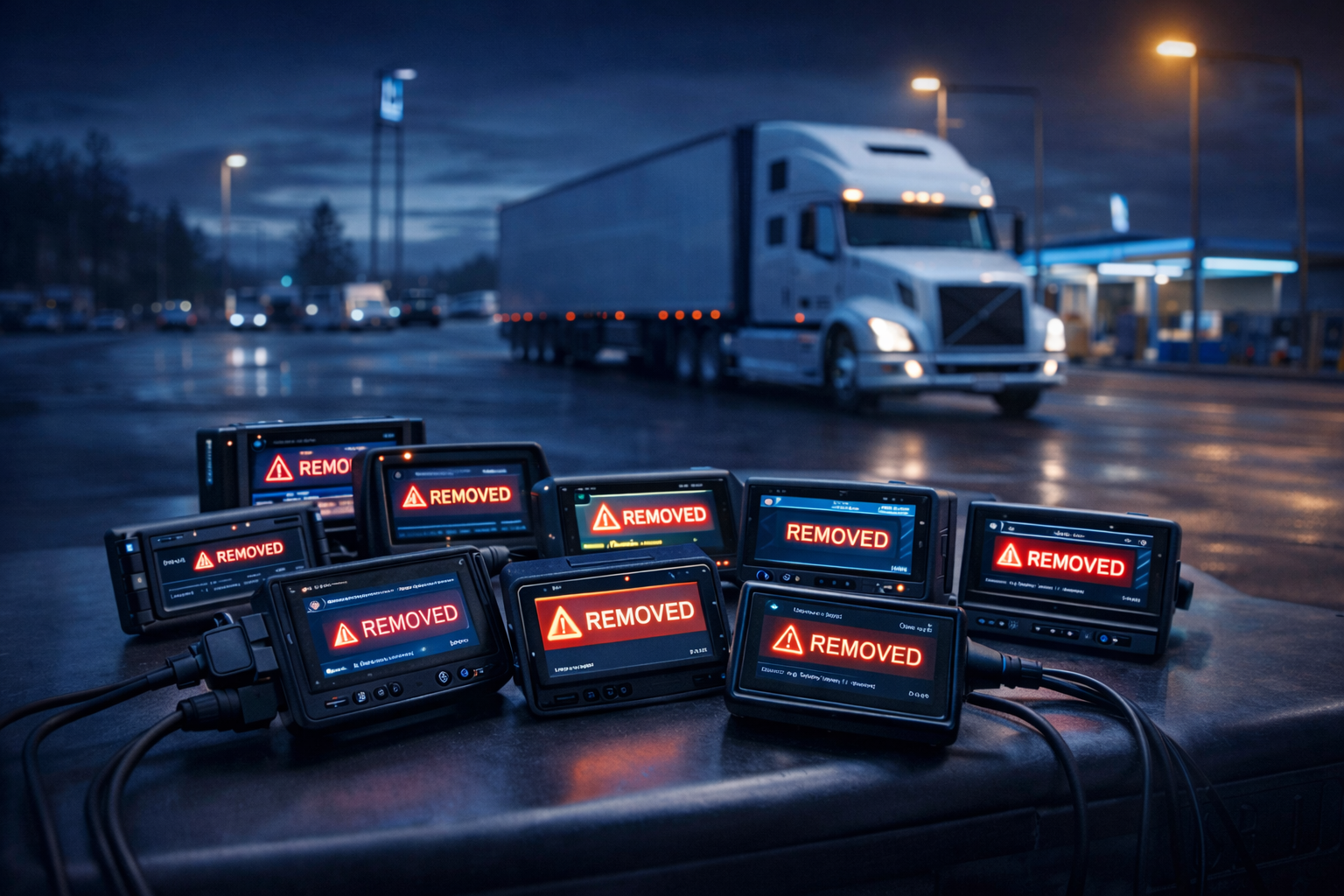
FMCSA Removed 9 ELDs
4 Марта, 2026
FMCSA removed 9 ELD devices from the registry. Drivers must replace th ...
Read more